



OUR HISTORY
FROM THE SANCTUARY TO THE STREETS
For generations, Nashville’s Black ministerial community has brought faith, leadership, and organized action together in the pursuit of justice. The Interdenominational Ministers Fellowship grew from that tradition and continues its legacy of collaborative faith leadership in Nashville.

THE EARLY YEARS
FAITH LEADERS ORGANIZE FOR JUSTICE
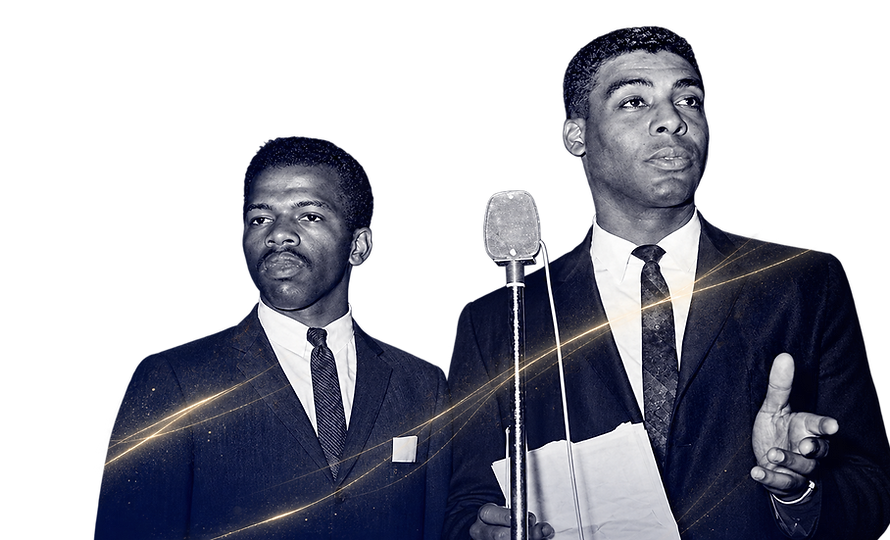
The roots of the Interdenominational Ministers Fellowship reach back to Nashville’s Black ministerial leadership during the civil rights era. In the 1950s, clergy organized across congregational and denominational lines to confront the social and economic conditions facing Black Nashvillians.
Early organizations included the Baptist Ministers Conference and, later, the Nashville Christian Leadership Conference. The Nashville Christian Leadership Conference existed from 1958 to 1964 and became part of the organized civil rights movement in Nashville. Its leaders developed strategies for marches, protests, and direct action, including support for the Nashville sit-ins.

A TIME LINE OF EVENTS
KEY MOMENTS IN OUR JOURNEY
1950s
1960s - 1970s
1982 - 1989
2001 - 2004
2014 - 2015
2018 - 2019
Formation in Nashville
IMF was founded in the 1950s as ministers united to address the social and economic challenges facing Black Nashville during Jim Crow.
IMF worked through the Nashville Christian Leadership Conference, supporting marches, protests, and the Nashville sit-ins, standing with students and community members demanding change.
Faith in the Streets
IMF established a College Trust Fund supporting American Baptist College, Tennessee State University, Fisk University, and Meharry Medical College.
We also supported Nashville General Hospital at Meharry and helped organize the city's first MLK Day march.
Expanding Opportunity
A New Home for the Movement
New Leadership
Stronger Together
Jefferson Street Baptist Church became the central hub for the MLK breakfast and march.
IMF advocated for greater opportunities for Black police officers, firefighters, and other city workers.
Rev. Judy Cummings made history as IMF's first female president. During this period, IMF launched Watchdog Teams to monitor schools, the Metro Council, state legislature, the mayor's office, and police practices.
IMF deepened coalition building, working with the Equity Alliance, Black Lives Matter, Souls to the Polls, the NAACP, and other partners to advance justice, education, and civic engagement across Nashville.

In the midst of social and political upheaval, the Interdenominational Ministers Fellowship (IMF) formally took shape—uniting pastors, clergy, and lay leaders from across Nashville's diverse faith communities.
Together, they built a stronger, more coordinated front to advocate for civil rights, economic opportunity, and the spiritual well-being of all people in Middle Tennessee.